
Call us
07971189571
Call us
07971189571
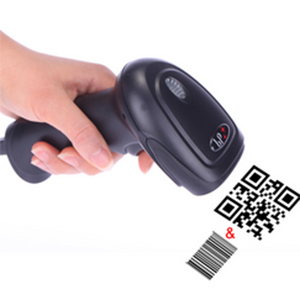

2 Dimensional (2D) are barcodes that represent data in a matrix of contrasting cells. The most common 2D barcode is the QR code, which is heavily used for advertising and marketing purposes. However, 2D barcodes are used for much more than advertising. Unlike 1D barcodes, 2D barcodes can contain data vertically and horizontally, which allows the barcode to contain much more information than its processor. According to Barcodes Inc, 2D barcodes can contain 2000 characters or more. They are also able to link to websites, can be used for product tracking, product identification, and more.
One of the 2D barcode include being able to scan the barcode from any direction. This makes scanning quicker and more efficient. Another benefit is only needing to scan the barcode once to collect all information. With 2D barcodes, multiple fields in your inventory system can be populated at once, versus making multiple scans with 1D barcodes. This is especially beneficial for working within a warehouse, where hundreds of scans are made a day. Another benefit is that 2D scanners have the ability to reduce the use of counterfeit items, by improving tracking of items through the supply chain. 2D barcodes can carry much more information than the 1D barcode, making products more difficult to counterfeit.
Main Differences Between 1D and 2D Barcodes
Feature
| 1D Barcode
| 2D Barcode
|
Things to Consider When Purchasing a Barcode Scanner
There are many different types of barcode scanners on the market today, and choosing the most suitable types important for the productivity of your business. Barcode scanners are used in industrial settings, retail stores, healthcare facilities, logistics, and warehousing. Some barcode scanners are built for specific work environments, such as extreme weather or to endure rougher conditions, while others are designed for less extreme environments and process data at a much quicker speed. This is why, in order to maximize your organizations efficiency, it is important to know the features and functions of various barcode scanners.
1. Barcode Reader
Are you scanning 1D or 2D barcodes? 1D barcode scanners are linear or one dimensional barcodes which represent data with parallel black bars and numbers. The most common type of 1D barcode that exists is a Universal Product Code (UPC) barcode, which is found on most product packaging.
2D barcodes, on the other hand, have vertical and horizontal data. A common 2D barcode is a QR code, which has become popular in marketing and social media. The main difference between these two barcodes is the amount of data they can contain; A 1D barcode can only contain 20-25 characters, while a 2D barcode can contain up to 2,000 characters.
2. Wireless Connection
When purchasing a barcode scanner you want to ensure that the scanner you pick has appropriate wireless connections for your work environment. This usually depends on how you want your data collected and inputted into your inventory system. Does your organization collect data in real-time and use a cloud-based inventory system? If it does, then you will need a wireless connection to the internet through WiFi or through a Mobile Broadband connection.
Scanners that transmit data through a WiFi connection are advantageous when your employees conduct all of their scans within a central location. For example, a WiFi connection is beneficial when employees are using barcode scanners within a warehouse. If your employees are in the field or on the road, having a mobile broadband connection is more beneficial. With a mobile broadband connection your employees in the field can transmit data wherever they go.
3. Wired Connections
Wired connections are extremely important if your organization is going to be collecting data with wired barcode scanners or uses a locally installed inventory system. Your organization will need to ensure the wired barcode scanners you choose are compatible with the computers installed with your inventory system. Scanners using wireless data transmission will also have wired data connections, so it is beneficial to check for these before making your purchase.
4. Screen
Not all barcode scanners are equipped with a display or touch screen. When deciding on a barcode scanner it is important to determine if it is beneficial or not for your barcode scanner to have a screen, and consider the complexity of what that screen can display. It can be beneficial to have a screen on your scanner device in order for your employees to receive transaction feedback. Transaction feedback notifies your employees whether or not there were any errors with the items they scan.
With a screen, scanners can have much more depth to their capabilities. For example, a Mobile Computer barcode scanner can push and pull information to and from your inventory system with a mobile application. Some mobile computers can even act as a both a cell phone and a barcode scanner.
5. Portability and Ideal Environment
Portability is a huge factor when selecting a barcode scanner - he environment the scanner will be working in will help determine what kind of scanner you need. If the scanner is going to be traveling and going out into the field, you will need a scanner that is durable, water resistant, can be used in extreme temperatures, and is extremely portable. If the scanner is being used in a retail environment, the scanner may not need to be portable and does not need to endure extreme weather conditions. Barcode scanners are built for various working conditions, and it is important to consider what kind of work environment you need a barcode scanner to operate in.

Price:



 English
 Spanish
 French
 German
 Italian
 Chinese (Simplified)
 Japanese
 Korean
 Arabic
 Portuguese
 Send Inquiry
 Get Latest Price

